Why I Am A Strong Advocate for Polio Survivors — Even Though I Never Had Polio
By Ken Masson,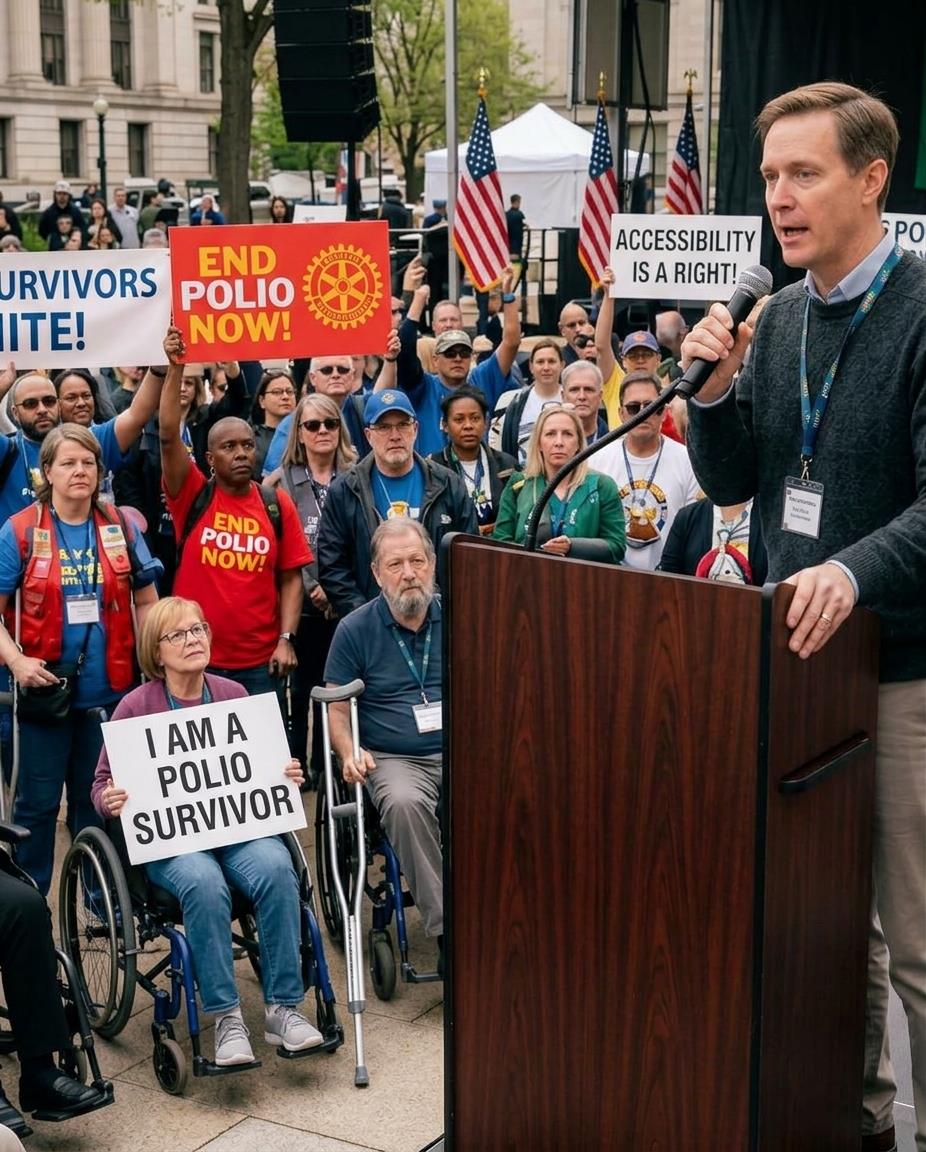
Past President,
Rotary Club of World Disability Advocacy (RCWDA)
I am a strong advocate for supporting people who are polio survivors, but sometimes people ask me what my interest is because I never had polio. This is my answer in an article format
Every October 24, the world celebrates Rotary’s fight to end polio. But for me, World Polio Day is also about the millions of survivors whose lives were shaped by the disease long after the virus faded from public attention.
I never had polio. I never faced paralysis, braces, or the long road of rebuilding a life. Yet I am committed to supporting survivors — because polio didn’t end when transmission stopped. Many live with weakness, fatigue, chronic pain, mobility challenges, and post-polio syndrome.
Survivors teach us what resilience truly looks like. They are educators, advocates, parents, professionals, and leaders whose lives reflect courage and determination. Their stories remind us that disability is not a deficit — it is a powerful dimension of human experience.
Rotary’s mission is not complete without them. Ending polio is historic, but supporting survivors is essential. Our commitment to service demands we stand with them.
That is why I will attend the Polio Life Celebration on October 24 — a gathering where we listen, learn, and honor the people whose lives illuminate the meaning of strength. For those of us who never had polio, showing up is an act of solidarity. It says: I see you. I hear you. I stand with you.
Supporting survivors is part of building a more inclusive world — one where accessibility, informed healthcare, and dignity are non negotiable.
I support polio survivors because they deserve what everyone wants: respect. I advocate for them because inclusion is essential. And on World Polio Day, I invite others to join me — not because we share their past, but because we share their future.